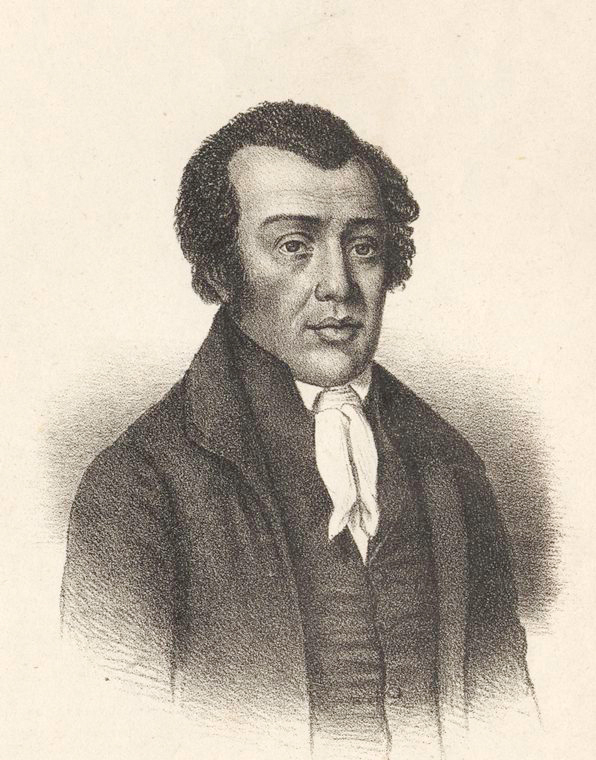
Richard Allen and Absalom Jones
Interviewer: Reverend Jones and Bishop Allen, thank you again for making time for our readers. There is so much to your community’s story that we could not do justice to it all in one sitting. Can you share with our readers how you two met?
Reverend Jones: Our meeting was indeed providential. But we’d instead share a more important story with you, right Allen?
Bishop Allen: Certainly, Reverend Jones. God did many great things through us in the early years of American society. I had been traveling throughout Pennsylvania preaching in different towns when the elders from St. George’s church sent for me to come to preach to the Black people in their congregation. I was not inclined at first to return to the city of my birth, where I had been born enslaved. See, I had found my footing as a traveling Methodist Preacher, and many appreciated my efforts.
Eventually, I gave in to the Spirit of God leading me. When I arrived, the elders told me I would preach at 5 a.m. on Sunday. The church had grown with both races attending, and the white peoples’ oppression of us also grew. I did go to the elders and suggested we build our own church, but they threatened to expel us from the faith if we chose that avenue. Then, elders further asked me to convince my community to finish the work on the church for them. The floors had to be completed, and a gallery built.
Reverend Jones: After we completed the work, the white people began pushing us off to the sides as their congregation grew. Then we arrived one Sunday morning and were told we must sit in the gallery. We all filed up the steps, Allen and I being the last; as they announced, “Let us pray,” we knelt in our places.
Bishop Allen: “We had not long been on our knees when I heard a considerable scuffling and loud talking. I raised my head and saw one of the trustees had a hold of the Reverend Jones and was trying to pull him up off his knees. A loud whisper reached my ears: “You must get up now; you cannot kneel here.” Absalom whispered back, “Wait until prayer is over.” But the trustees said, “No, you must get up now, or I will call for aid and force you away.”
Reverend Jones: I didn’t like to disrupt the congregation during prayer, nor is it respectful to the Lord. I told the trustee again that as soon as prayer was over, we would move and be no more a bother to them. But he wasn’t having it. When I refused again, he called for another trustee and tried to pull another parishioner away.
Bishop Allen: By then, the prayer was over, and we all stood up with one consent and walked out of St. Georges, never to return. We hired a storeroom and held worship for ourselves even as white folks continued to threaten and attack us. We persevered through and believed the Lord was our friend and would support our cause, and He did.
“Following the incident in St. George’s Church, Philadelphia, the group of people of African Descent who practically had been ejected there from their place of worship got together and on the 12th day of April 1787, organized The Free African Society.” (53 Bragg).
In 1793, Absalom Jones, Richard Allen, James Forten, and many other African-Americans were called upon by the mayor of Philadelphia to come forward and “assist the distressed and perishing and neglected sick” during the Yellow Epidemic Fever; it was assured them “that people of their color were not liable to take the infection. […] After some conversation, we found a freedom to go forth, confiding in Him who can preserve amid a fiery furnace, sensible that it was our duty to do all the good we could to our suffering fellow mortals. We set out to see where we could best be useful.” ( Allen and Jones 3).
Further, in 1794, the first two African churches, of which Jones and Allen are Founding Fathers, opened their doors for worship: The African Episcopal Church of St. Thomas and The African Methodist Episcopal Church, which later came to be known as Mother Bethel A.M.E. Church.